
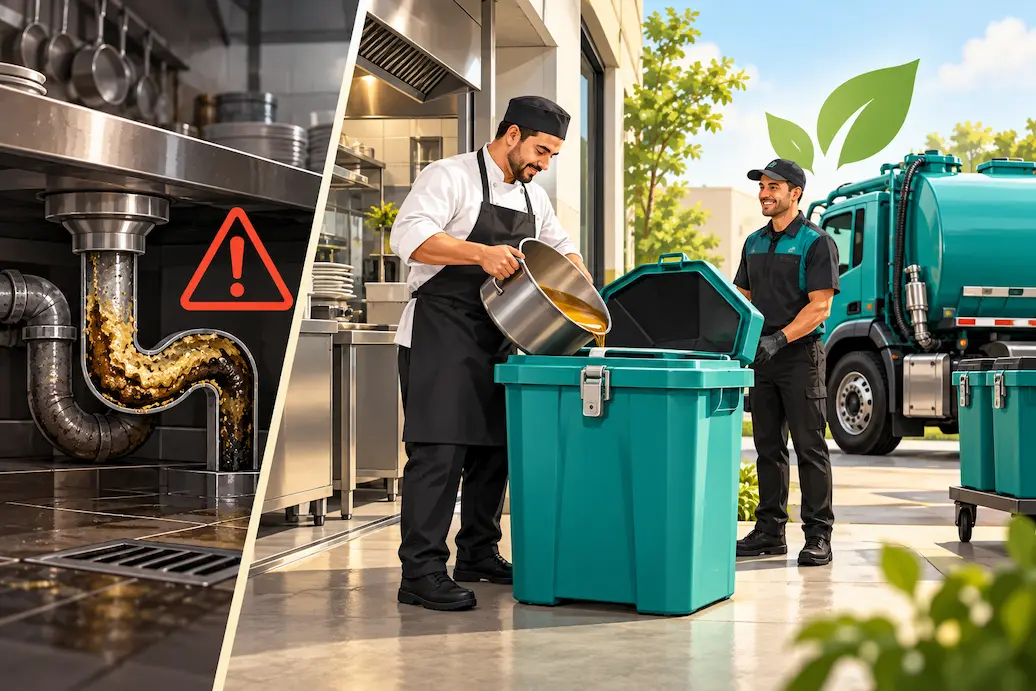
Every commercial kitchen produces used cooking oil, and how that oil leaves the building says a lot about how the business runs. Traditional waste disposal, dumping oil in the trash or pouring it down a drain, creates real risk for commercial kitchens. Comparing the two approaches makes the better path clear once you weigh the environmental impact and environmental sustainability, the legal exposure, and the dollars involved.
What's the Best Way to Dispose of Used Cooking Oil?
The best way to dispose of used cooking oil is to never really dispose of it at all. Used cooking oil is a valuable resource for biofuel production, so professional services that pick it up and route it toward renewable fuel and renewable energy are now standard for restaurants and food service operations. Cooking oil recycling protects your plumbing, keeps you compliant with local regulations, and often puts money back in your pocket instead of costing you a disposal fee.
The Risks of Traditional Waste Disposal
Sewer Blockages and Plumbing Repairs
Pouring oil down the drain is still one of the most common forms of improper disposal, and it's also one of the most expensive mistakes a kitchen can make. Grease from cooking is responsible for 47% of sewer blockages nationwide, and once oil cools and hardens inside pipes, it forms a fatberg that causes sewage backups in plumbing systems. Clogged pipes and costly plumbing repairs are the direct result, and repeated grease buildup can force plumbing systems to be replaced sooner than necessary.
Grease Trap Strain and Costly Repairs
Every commercial kitchen with a grease trap depends on it to catch fats, oils, and grease, but pouring used cooking oil down the sink overwhelms that grease trap fast. A grease trap paired with proper cooking oil disposal stays clean and passes inspection; a grease trap left to catch dumped oil fills with hardened waste oil, forcing costly repairs and pump-outs. Restaurants that skip careful handling of spent oil often find their grease trap failing inspection, since a grease trap overloaded by dumped oil looks nothing like normal buildup.
Environmental Contamination
Oil poured into a sink or storm drain doesn't just disappear. It moves through the plumbing and can end up in local waterways, coating the surface of the water and blocking oxygen exchange. Sewage backups caused by grease can pollute natural water sources directly, and improper disposal creates measurable environmental impact and contamination that professional recycling services are designed to prevent, while also protecting environmental health in the surrounding community.
Fines and Legal Penalties
Local municipalities enforce strict requirements for used cooking oil disposal, and noncompliance with cooking oil disposal laws can result in fines. Improper disposal can also lead to severe penalties and, in repeated cases, operational shutdowns. Restaurants must document oil management practices for health inspections, and agencies like the Orange County Sanitation District require proper oil storage so used oil gets recycled properly.
What Do Recycling Centers Do With Used Cooking Oil?
Recycling facilities collect used cooking oil from restaurants and other food service operations, filter out food particles and other contaminants, and process the oil into biodiesel, renewable diesel, or animal feed. This conversion process is what allows recycled cooking oil to displace petroleum based diesel, supporting renewable energy and reducing the industry's overall carbon footprint. Some collected oil is refined further into other industrial products, but biodiesel production remains the most common end use.
Professional Recycling vs Traditional Disposal: The Real Comparison
Environmental Benefits
Recycling used cooking oil reduces carbon emissions by over 60% and minimizes greenhouse gas emissions by up to 94% compared to fuel from crude oil. Recycling also keeps oils out of landfills, prevents toxic grease from contaminating soil and waterways, and prevents hazardous spills that could harm aquatic ecosystems. Traditional disposal offers none of these environmental benefits, does nothing toward reducing waste, and instead concentrates pollution risk in local landfills.
Regulatory Compliance
Professional services eliminate most of the grease disposal liability that falls on commercial kitchens, since a licensed provider handles regulatory compliance and proper containment as part of the collection service. Traditional disposal leaves the restaurant fully exposed. Proper containment also lowers the risk of fire hazards and health and safety issues, which local health inspectors take seriously alongside food quality.
Financial Impact
Many recycling programs pay restaurants for the used cooking oil collected, turning an expense into a small revenue stream, and even without a rebate, recycling generally lowers operational costs by avoiding plumbing repairs, fines, and emergency cleanup. Traditional disposal carries none of those cost savings for business operations and instead invites the exact repairs and penalties recycling prevents.
Operational Efficiency
Scheduled pickups from a professional recycling service streamline oil management and help maintain cleanliness and safety across daily operations. Standardized procedures reduce labor hours spent on cleanup and reduce spill hazards, keeping oil storage from becoming the kind of mess that can disrupt kitchen operations. Traditional disposal, by contrast, tends to be reactive: oil gets dealt with whenever someone has time, which is exactly how spills, odors, and compliance problems start.
Biodiesel Production and the Circular Economy
Used cooking oil can be processed into biodiesel and other useful products, supporting a circular economy where restaurant waste becomes a resource rather than a disposal cost. That cycle depends on cooking oil collection at the source, which is why professional services often pair fresh oil delivery with a used oil pickup and cooking oil collection stop on the same visit, so used oil never sits around long.
Choosing a Professional Service Provider
A good service provider handles more than pickup and offers proper management of the entire process, from used oil pickup to a documented oil collection and collection service record that shows you properly dispose of every batch. Look for comprehensive services that include leak-proof storage containers, a documented collection service history, and a track record with local businesses similar to yours. The right provider supports local communities and the local economy by keeping recycling revenue close to home, while promoting environmental sustainability and sustainable practices that go beyond the minimum required by local laws.

FAQS
What's the best way to dispose of used cooking oil?
Never pour it down the drain. The best approach is storing it in a sealed container and having a professional recycling service collect it on a regular schedule, which protects your plumbing and turns the oil into renewable fuel.
How does Martha Stewart get rid of cooking oil?
She soaks it up with paper towels or torn paper bags while the pan is still warm, then throws the soaked towels in the trash instead of pouring the oil down the sink.
What does McDonald's do with their used cooking oil?
McDonald’s recycles used cooking oil from its restaurants into renewable diesel and biodiesel, using the fuel to power its own delivery trucks in several international markets.
What do recycling centers do with used cooking oil?
They collect the oil, filter out food scraps and other contaminants, and process it into biodiesel, renewable diesel, or animal feed, keeping it out of landfills and the sewer system.
The Bottom Line
It comes down to risk versus reward. Traditional disposal risks clogged pipes, environmental contamination, and fines, while professional recycling protects your plumbing, keeps you compliant, and can put money back into your business. For any commercial kitchen producing used cooking oil on a regular basis, recycling isn't just the responsible choice, it's the one that costs less in the long run.
Stop Risking Your Drains — Start Recycling Instead
Eazy Grease gives restaurants a better option than the trash or the drain: a free assessment, a secure leak-proof container at no cost, and a transparent rebate on every pickup, no hidden fees, no long-term contract. Get started with service today and turn a disposal risk into steady revenue.
GET STARTED