
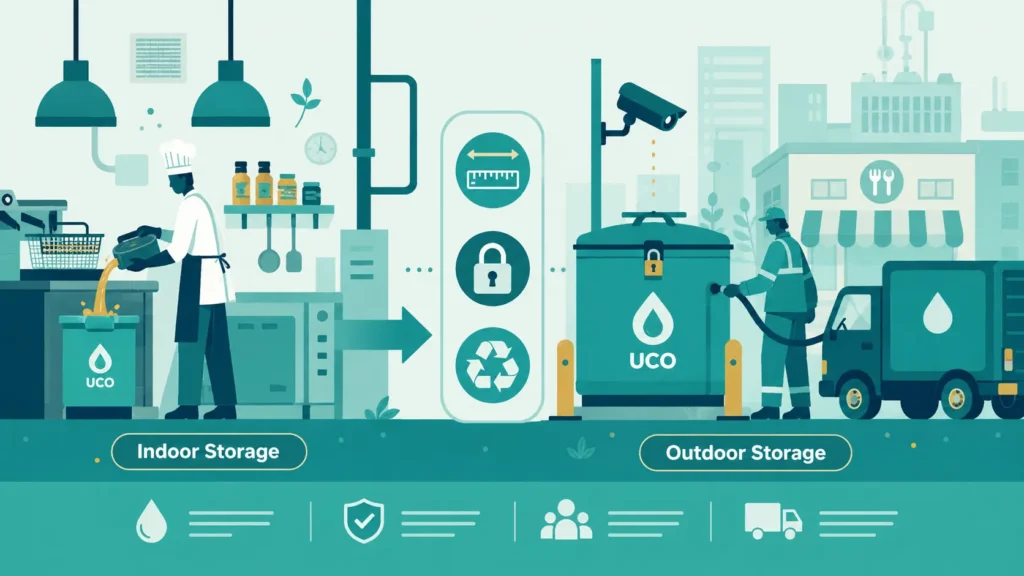
This UCO container placement guide is for any restaurant, food truck, or foodservice industry operation that wants to store and manage used cooking oil safely, compliantly, and profitably. Where you place your storage container, what size you choose, and how you secure it are decisions that affect your rebates, your compliance record, your kitchen safety, and your bottom line. This comprehensive guide covers everything you need to know.
Why Container Placement Matters More Than Most Operators Realize
Poor container placement is one of the most common and costly mistakes restaurants make with their used cooking oil program. A container in the wrong location leads to spills near drains, overflow between pickups, theft, failed health inspections, and degraded oil quality that reduces rebate income.
Proper UCO storage protects your business on every front. A well-placed, correctly sized container keeps your kitchen safe, your oil valuable as a commodity, and your operation compliant with local health and environmental regulations. Getting placement right from the start saves money and prevents problems that are far more expensive to fix after the fact.
Step 1: Assess Your Actual Oil Volume
Before deciding on container size or placement, you need to know your actual oil volume. This is the single most important input into any container decision.
Track how many gallons your fryers produce per week over a typical month. Volume varies significantly by menu type, fryer count, and service hours. A small restaurant generating 20 to 60 gallons monthly has very different needs from a high-volume operation producing 150 or more gallons per month.
Getting volume wrong in either direction creates problems. Undersized containers overflow between pickups, creating spills, compliance violations, and safety hazards. Oversized containers allow oil to sit too long, degrading oil quality and reducing rebate value. (ADD LINK TO CALCULATOR)
Container Types and Sizing
![Four UCO container types side by side: Eco-Tub, 55-gallon drum, 240-gallon outdoor tank, Indoor Storage Container]
Choosing the right container starts with matching size to volume output.
Eco-Tubs (Portable Indoor Units) Eco-tubs are portable containers that can be stored under countertops or in tight back-of-house spaces. They are the right choice for very low-volume kitchens, food trucks, and operations where indoor tanks are the only viable option. Eco-tubs are emptied manually or transferred to a larger outdoor unit for collection.
55-Gallon Containers A 55-gallon storage container suits small restaurants generating between 20 and 60 gallons of used cooking oil monthly. These containers can be placed indoors or outdoors depending on kitchen layout and available space. They are manageable for staff to work around and easy for collection trucks to service.
240-Gallon Outdoor Tanks A 240-gallon container is ideal for medium to large restaurants generating 100 or more gallons monthly. These are almost always placed outdoors in a designated external storage area. Their capacity reduces pickup frequency, but they require more careful placement planning to meet security, safety, and compliance requirements.
Automated Pump Systems For high-volume operations, automated pump systems connect directly to fryers and transfer cooled oil into storage tanks without any manual handling. These systems reduce oil-handling labor by up to 75% and eliminate the burns and spills associated with manual transfer. If your fryer output is high enough to justify the equipment, automated systems are the safest and most efficient option available.
Indoor Tanks: When They Make Sense
![Under-counter indoor UCO storage tank in a commercial kitchen]
Indoor tanks work well for smaller operations or kitchens where outdoor access is limited. The placement rules for indoor tanks are straightforward:
Keep containers away from heat sources. Used cooking oil is combustible. Storing a container near open flames, hot equipment, or direct heat sources creates a fire risk that no operation can afford. Position indoor storage well away from fryers, ovens, and any other heat-generating equipment.
Allow clear transfer space. Staff need room to safely transfer cooled oil from the fryer into the container without spilling. Cramped placement increases the risk of burns and spills. Allow adequate clearance on all sides of the container for safe operation.
Use drip trays under indoor containers. Bunding or drip trays underneath indoor storage catch any leaks or minor spills before they reach the floor, preventing slip hazards and keeping your kitchen inspection-ready.
Never store hot oil. Oil must be fully cooled before transfer into any container. Transferring cooking oil safely means waiting until it reaches a safe handling temperature. Hot oil in an enclosed indoor container is a serious safety and fire risk.
Outdoor Tanks: Placement Rules That Matter
![Outdoor 240-gallon UCO tank secured with lock on a level concrete pad at a restaurant]
Outdoor tanks are the standard for most restaurants generating meaningful oil volume. Proper placement of outdoor tanks requires attention to several factors simultaneously. Most placement locations would go in the garbage coral area or by the back door, but in some incases you need to take a few things into consideration prior to placing your grease bin on site.
Surface and Grade Place your container on a level, stable surface with a maximum 2% grade. Uneven ground causes containers to shift over time, stresses fittings, and can lead to leaks. A concrete pad is the most reliable base. Avoid gravel, dirt, or surfaces that shift with weather changes or heavy rain.
Distance from Drains and Waterways This is a non-negotiable compliance requirement. Used cooking oil spills that enter storm drains violate environmental regulations and result in fines and penalties. Position your outdoor tanks away from storm drains, drains at building perimeter, and any environmentally sensitive areas on or near your property. Secondary containment, such as a bunded area or containment tray, may be legally required for larger storage volumes in your jurisdiction.
Distance from Heat Sources and Traffic Store containers away from heat sources including HVAC exhaust vents, kitchen exhaust outlets, and any equipment that generates sustained heat. Also keep tanks clear of vehicle traffic paths. A container struck by a delivery vehicle creates an immediate spill and compliance emergency.
Sheltered Location Where possible, use a sheltered location to protect outdoor tanks from direct sunlight and rainwater intrusion. Prolonged sun exposure raises container temperature, which degrades storage units over time. Rainwater contamination dilutes the oil and reduces its value as a recycling feedstock, directly impacting your rebates. In some cases excess rain caused some container to overfill so ensure lids are closed when not in use.
Clear Access for Collection Trucks Collection vehicles must have easy, unobstructed access to your storage container during pickups. A container blocked by parked vehicles, deliveries, or other equipment creates scheduling delays and may result in missed pickups. Map your placement so the truck can pull directly alongside the tank without maneuvering around obstacles.
Maintain Clear Space Around the Container Keep storage areas clear of clutter, other waste streams, and unrelated equipment. Containers should be clearly labeled to prevent accidental mixing with other waste. Maintain cleanliness around the container to reduce slip hazards and pass health inspections without issues.
Security and Theft Prevention
![Locked and secured outdoor UCO storage tank with anti-theft features]
Used cooking oil has real commodity value, and theft from restaurant containers is a genuine and growing problem. When oil is stolen before collection, you lose the rebate income you would have earned and the commodity value of the oil itself. Security is not optional.
Locking Mechanisms Every outdoor storage container should have a secure, tamper-resistant lock. This is the baseline. A container without a lock is an open invitation in any commercial area.
Placement in Well-Lit Areas Containers placed in secure, well-lit areas are significantly less likely to be targeted. If your back-of-house area is poorly lit, adding lighting around your UCO storage location is a low-cost security investment that pays for itself quickly in protected rebate income.
Monitor Fill Levels Regularly check fill levels between scheduled pickups. Unexpected drops in volume that do not correspond to normal kitchen output are a reliable indicator of theft. If you notice consistent unexplained volume loss, report it to your collection company and consider additional security measures.
Security Cameras Placing a grease bin where your security cameras are pointing to is a deterrence measure to keep grease thieves from breaking into your storage unit. In a situation where your UCO container has been broken into, having proof to show your grease vendor and police can help local law enforcement in their investigation.
Prevent Overflow as a Secondary Security Measure Containers that overflow draw attention to the storage location and signal to opportunistic thieves that the container is full and unmonitored. Keeping your pickup schedule matched to your actual output and working with your provider to prevent overflow is both a compliance and security measure.
Rebates: How Placement and Storage Affect What You Earn
Restaurants can earn between $0.25 and $0.75 per gallon by recycling their used cooking oil, with rates varying based on oil volume and quality. Food Trucks and small cafes might not even qualify for rebates due to low volume of oil produced. There is a lot of overhead to collect and recycled used fryer oil, so a licensed collector might not offer a rebate for an unqualified operation.
Placement directly affects those numbers. Oil that has been contaminated by rainwater, degraded by heat, or mixed with other waste streams is downgraded at the processing facility, reducing its value. Oil that overflows and is partially lost to the ground never gets counted toward your rebate. Oil that is stolen earns nothing.
Proper storage, correct container sizing, and consistent collection schedules are the three variables most within a restaurant’s control when it comes to maximizing rebate income. UCO recycling also reduces waste disposal costs, meaning the financial benefit runs in both directions.
Operational Best Practices for Day-to-Day Container Management
![Kitchen staff safely transferring cooled used cooking oil into a storage container]
Good placement is the foundation, but daily operational practices determine how well the system performs over time.
Always cool oil before transfer. Never transfer hot oil directly from a fryer into a storage container. Allow it to cool to a safe handling temperature first. This prevents burns, reduces fire risk, and protects container integrity.
Inspect containers regularly. Regularly inspect UCO containers for leaks or damage. A small leak left unaddressed becomes a compliance issue, a slip hazard, and a loss of rebate-earning oil.
Keep the area clean. Grease buildup around the base of a container creates slip hazards and attracts pests. Wipe down spills immediately and include the container area in your regular cleaning schedule.
Match your schedule to your volume. Work with your collection company to set a pickup frequency that matches your actual fryer output. A schedule that is too infrequent leads to overflow. One that is too frequent adds unnecessary operational cost. The right schedule keeps containers at a manageable level without ever pushing toward capacity.
Train your team. Every staff member who interacts with the fryer and the storage container should understand the correct process. This means proper cooling time, correct transfer technique, lid security after every use, and who to contact if they notice a leak, theft, or overflow risk.
A Quick Placement Checklist
Before finalizing your container location, run through this list:
- Surface is level with a maximum 2% grade
- Container is away from heat sources and direct sunlight
- Container is away from storm drains and waterways
- Secondary containment is in place when legally required
- Collection truck has clear, unobstructed access
- Location is well-lit and secure
- Container is clearly labeled
- Storage area is kept clear of other waste streams
- Security camera pointing at grease bin
- Locking mechanism is installed and functioning
Ready to Set Up Your UCO Container the Right Way?
At Eazy Grease, we supply free, properly sized containers for your operation, help you find the right placement for your kitchen layout, and set a collection schedule that matches your actual oil volume. Whether you need an indoor eco-tub, a 55-gallon drum, or a large outdoor tank with security features, we have the equipment and expertise to get your UCO storage working correctly from day one.
Get a Free Quote at Eazygrease.com – share your location, fryer count, and estimated oil volume and we will respond within one business day.
Call us to speak with a used cooking oil specialist who can walk you through the right container setup for your specific kitchen.