
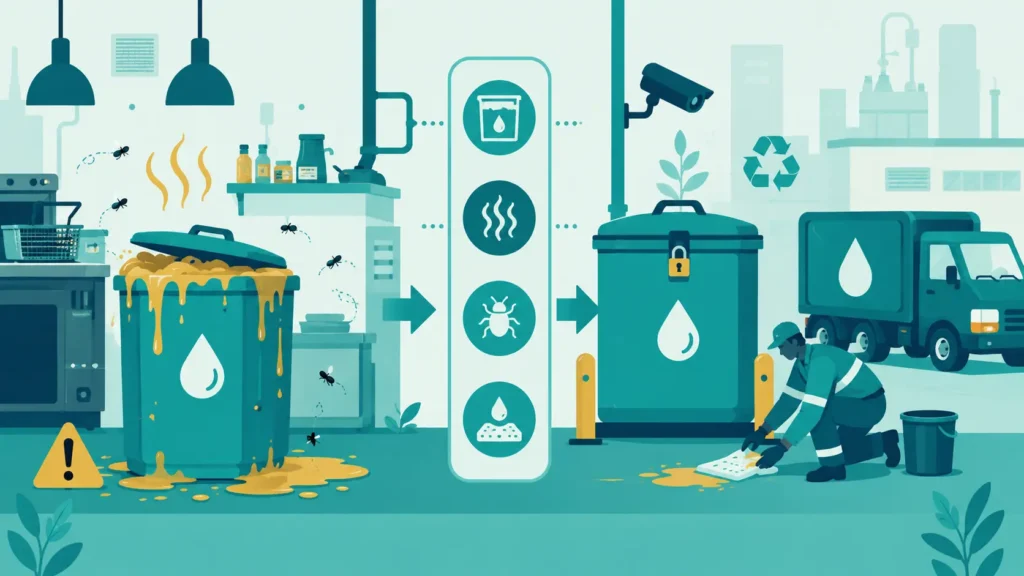
This quick fix guide covers the four most common problems restaurants run into with their grease storage and collection: overflows, odors, pests, and spills. Each one has a straightforward fix, but left unaddressed, any of them can become a health code violation, an environmental liability, or a direct hit to your rebate income.
Overflows
Overflows happen when grease volume outpaces your collection schedule. The fix is simple: match your pickup frequency to your actual output. If your container is consistently reaching capacity before the truck arrives, contact your provider to increase collection frequency or upgrade to a larger container. Prevent overflow before it happens by monitoring fill levels regularly and flagging your provider when oil volume spikes during busy periods.
Overflows are not just an inconvenience. Oil that spills onto the ground near a drain can enter the sewage system and contribute to the fatbergs that cost cities approximately $18 million to remove. Spills that reach waterways harm aquatic life and can make up to one million gallons of fresh water undrinkable. Never pour excess waste cooking oil down a sink or drain to manage an overflow situation.
Odors
Odor problems around grease storage are almost always caused by one of three things: oil sitting too long between pickups, contamination from food particles left in the oil, or a container that has not been cleaned properly over time.
When draining fryers, strain used oil to remove food particles after each use before transferring it to storage. Old oil that has broken down loses the ability to seal a food surface quickly during frying food and can absorb flavors and go rancid, producing a smell that gets worse with every passing day. Keep oil away from strong cleaning chemicals that mix with grease and accelerate the breakdown process.
If odors persist, ask your provider to inspect the container for residue buildup. A thorough clean between collections resets the whole process and eliminates the odor at its source.
Pests
Grease residue around the base of a UCO container, drips on the ground, and improperly sealed lids all attract pests. Cockroaches, flies, and rodents are drawn to the smell of cooking oil and fats, and a poorly maintained storage area gives them exactly what they need.
The fix is cleanliness and sealing. Wipe down the exterior of the container and the surrounding surface after every oil transfer. Make sure lids are fully closed and latched after each use. Keep the storage area free of other food waste that compounds the attraction. In recent years, pest-related health violations tied to grease storage have become an increasingly common reason for failed inspections. A clean container area is one of the easiest ways to protect your restaurant’s compliance record.
Spills
Spills during oil transfer are most commonly caused by transferring hot oil before it has fully cooled, using the wrong equipment, or working in a cramped space without enough clearance. Pour cooled oil carefully into a sealed container using proper transfer equipment. Never rush the transfer of hot grease. The slower you pour the used oil into the grease bin, the less of a chance of a spill.
For outdoor storage, use bunding or drip trays to catch minor spills before they reach the ground. Improper disposal of even small amounts can clog pipes, cause sewage backups, and trigger fines under local environmental regulations. Spills that enter drains are a health risk, an environmental hazard, and a direct violation in most jurisdictions.
If a significant spill occurs, contain it immediately, prevent it from reaching any drain or surface water, and document the incident for your compliance records.

FAQS
Can cooking oil be used after 2 years or it expires?
No. As oil ages, its smoke point decreases, and it develops a rancid smell over time. Discard oil if it develops a dark color, a rancid odor, or foaming during use. Foaming occurs when oil is contaminated with water or soap, both signs that it is no longer safe or effective.
Which cooking oil is best for cardiac patients?
Oils lower in saturated fats and higher in unsaturated fats, such as olive oil, avocado oil, and canola oil, are generally considered better options for heart health. A doctor or registered dietitian can provide guidance specific to individual needs. Even healthier vegetable oil options produce waste oil that should be recycled properly rather than poured down the drain.
Is it safe to reuse used cooking oil?
Oil can be reused a limited number of times if it is strained, stored in a sealed container in a cool dark place, and monitored for changes in color, smell, and viscosity. Use a cooking thermometer to maintain proper frying temperatures. Reused oil that develops a rancid smell, dark color, or unusual texture should be discarded and sent for recycling rather than continued use.
How do you know if used cooking oil is bad?
Signs that oil has passed its useful life include a dark color, a rancid or off odor, excessive foaming during use, and visible food particle contamination. When oil reaches this point, store it in a sealed container and arrange for collection. One solution for consistent quality management is to partner with a professional used cooking oil disposal service that collects on a schedule matched to your output, keeping your kitchen running on fresh oil and your waste cooking oil moving into the recycling stream before it degrades further.
Why Proper Disposal Matters Beyond the Kitchen
Improper disposal of used cooking oil creates major problems that extend far beyond a single restaurant. Cooking oil solidifies in pipes, causing blockages that lead to sewage backups and overflows. Oil pollution disrupts aquatic ecosystems and food chains, harming fish and aquatic life downstream.
On the other side of proper disposal, the recycling opportunity is significant. Waste cooking oil can be converted into biodiesel, renewable diesel, sustainable aviation fuel, and other renewable fuel products that reduce reliance on fossil fuels and cut greenhouse gas emissions including carbon dioxide and methane, a potent greenhouse gas generated when oil waste breaks down in landfills. Recycling keeps it out of landfills and puts it to work as a sustainable energy source instead. Many cities now have designated recycling programs, and companies like Mahoney Environmental collect waste cooking oil from over 55,000 locations across the U.S. to feed this pipeline.
Proper used cooking oil disposal is not just a regulatory checkbox. It is a meaningful sustainability decision that protects the environment, your business, and your community.