
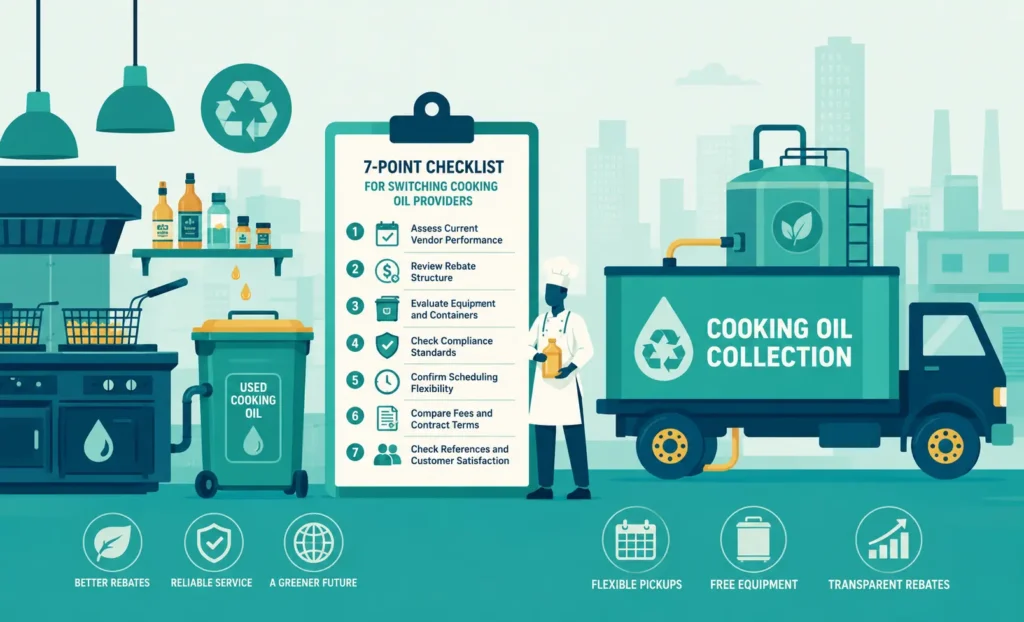
If your grease pickups are unreliable, your rebates have dropped, or your containers keep overflowing, it may be time to find a better used cooking oil collection partner. This checklist gives restaurants a clear, practical framework for evaluating new recycling services before making the move.
1. Assess Your Current Vendor Performance
Are pickups happening on schedule? Are containers being fully emptied each visit? If you are constantly managing grease issues, your current service is not doing its job. Document missed pickups and overflow incidents before you start comparing solutions.
2. Review Your Rebate Structure
Used oil is a valuable resource. Restaurants generating significant cooking oil volume should be earning monthly rebates. Ask any new company how rebates are calculated, how often they are paid, service fees and whether impurities are deducted from the yield before payment. Recycling services that are transparent about rebates from day one are worth trusting.
3. Evaluate Cooking Oil Equipment and Containers
Undersized or poorly maintained storage tanks create spills, drain blockages, and compliance violations. Plastic oil containers are not as durable as steel and can be easily broken into by thieves. Used cooking oil collection services often provide specialized containers for safe storage and collection, ensuring compliance with health and safety regulations. When you compare providers, confirm that cooking oil equipment is supplied free of charge, sized to your volume, and maintained by the company rather than your team. Cooking oil recycling works best when the right equipment is in place from the start.
4. Check Environmental and Compliance Standards
Proper disposal of used cooking oil through professional collection services helps prevent environmental regulation issues such as clogs in municipal sewer systems and pollution of waterways. Converting used cooking oil into renewable fuel like biodiesel supports a circular economy, reduces reliance on fossil fuels, and cuts greenhouse gas emissions by up to 80% compared to traditional fuels. Used cooking oil can also be repurposed into animal feed and industrial lubricants, giving waste materials a second life. If you city or state requires grease hauler permits, ask vendor for their license number. Large restaurant groups and franchises work with ISCC certified collection companies in order to ensure ESG standards.
5. Confirm Pickup Scheduling Flexibility
Every restaurant has unique needs. Many cooking oil collection services offer flexible pickup schedules tailored to the specific needs of businesses, allowing for collection during non-peak hours to minimize disruption. High-volume commercial kitchens may need weekly oil recycling pickups, while smaller locations do fine with monthly service. Inflexible scheduling before you sign is a sign of inflexible service after. Last thing you want is overflowing containers.
6. Compare Service Fees and Contract Terms
Not all cooking oil recycling services are structured the same way. Review contract length, equipment ownership terms, termination clause and any service fees before committing. Many businesses are surprised to realize that hidden fees can offset rebates entirely if not reviewed carefully. The best solutions are transparent about costs and offer free services to qualifying restaurants.
7. Check Customer Satisfaction and References
Reviews from other restaurants and food service industry businesses are the most honest measure of how a company performs after the contract is signed. Dar Pro Solutions is one of the most recognized names in used cooking oil recycling on a national scale. When you compare options, look at how local and regional providers like Eazy Grease deliver on customer satisfaction, community commitment, and reliable oil collection day to day.
Making the Switch Without Disruption
Switching providers does not have to disrupt your operations. A reliable new company will deliver and install cooking oil equipment before your final pickup with the old provider, train your team on containers and drain procedures, and confirm your first collection date and rebate schedule before going live.
Why Restaurants Choose Eazy Grease
Eazy Grease provides free cooking oil equipment, flexible pickup scheduling, and transparent rebates tied to the volume of used cooking oil you generate. Our collection and oil recycling process transforms grease into biodiesel and other renewable energy products, reducing environmental impact and supporting a greener future for the communities we serve.
We take pride in delivering efficient, reliable used cooking oil collection that makes a genuine positive impact for our customers. Whether you are disposing of fryer grease from one location or managing waste across multiple restaurants, our solutions are built around your business.
Ready to Make the Switch?
Your used cooking oil deserves a reliable partner. So does your business.
Get a Free Quote at Eazygrease.com – share your location and used oil volume, and we will respond within one business day with a custom collection plan and rebate estimate.
Call us to speak with a used cooking oil specialist who understands your unique needs.
Email us to compare services and explore your options at your own pace.
Join restaurants and food service businesses nationwide that trust Eazy Grease for clean, compliant, and profitable used cooking oil collection. A greener tomorrow starts today.