
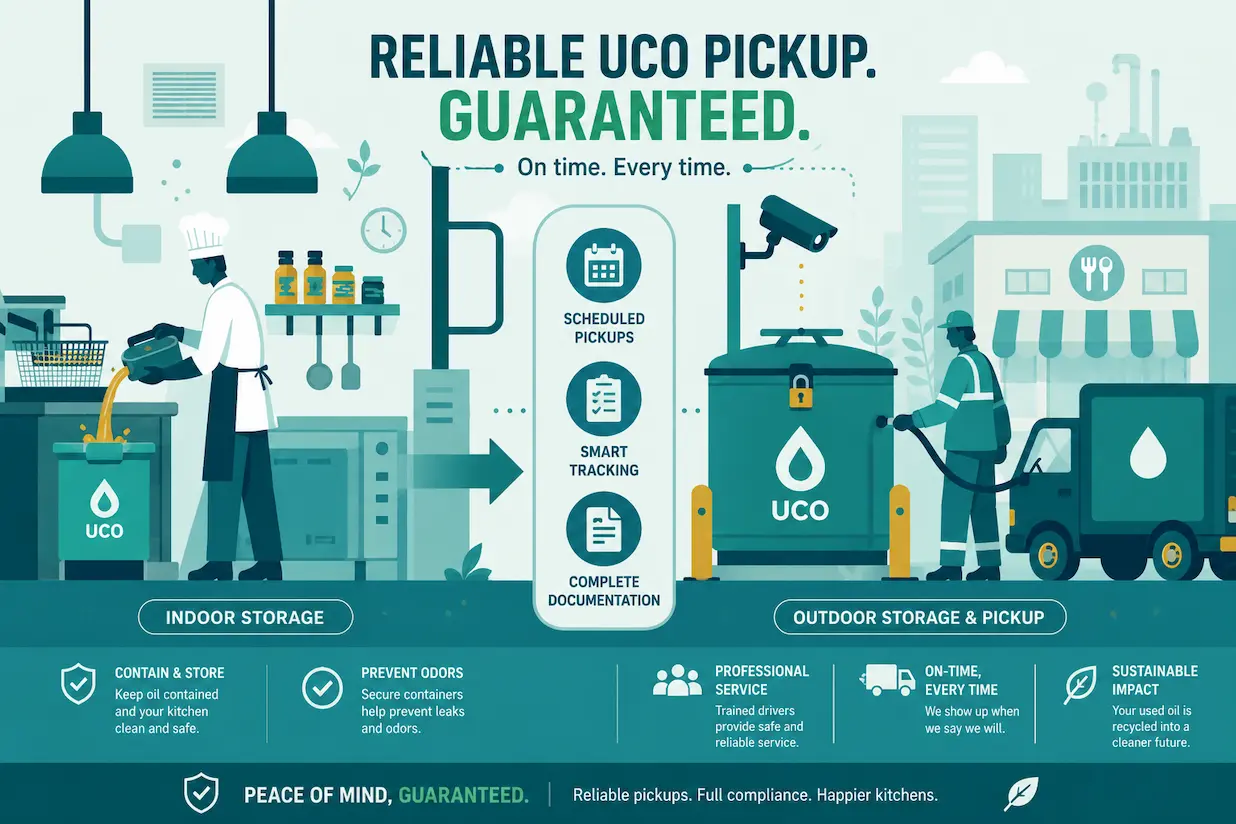
When your fryer oil sits uncollected, your kitchen pays for it. Overflowing UCO containers, failed health inspections, and lost rebate income all trace back to the same root cause: a recycling partner that does not show up when it should. This guide covers the right questions to ask any cooking oil recycling company before signing an agreement, and what reliable service actually looks like day to day.
What Do Companies Do with Old Cooking Oil?
Reputable companies collect used cooking oil and route it through a recycling process that converts it into biodiesel, renewable diesel, and animal feed. Billions of pounds of used oil are collected annually across North America. Recycling used cooking oil prevents severe environmental damage, supports cleaner energy production, and eliminates the greenhouse gas emissions that come from improper disposal. When handled properly by a certified partner, your fryer oil enters a supply chain that benefits restaurants, communities, and the environment.
Is Used Cooking Oil Considered Hazmat?
Used cooking oil is not classified as a hazardous material under federal regulations in most circumstances. Standard waste transport permits are sufficient for licensed collection services. That said, improper disposal of cooking oil violates environmental regulations and can trigger fines. Always verify that your service provider holds necessary waste transport permits and adheres to EPA regulations before allowing them to service your location. Regulatory compliance is a baseline requirement, not a bonus feature.
What Is the Proper Way of Disposing of Used Oil?
The correct method for disposing of used oil from commercial kitchens is through a licensed UCO collection service. Here is what that process should include:
Storage. Used oil is cooled and transferred into sealed UCO containers supplied by your recycling partner. Oil must be free of water and food solids to receive the highest market price. Clean, uncontaminated oil protects your rebate income. Indoor storage containers must fit into your kitchen’s existing layout without disrupting daily operations.
Scheduled pickups. A trusted partner sets pickup frequency based on your actual volume, preventing overflow and keeping containers at a safe level. Scheduled pickups should be confirmed with digital service logs your team can access.
Documentation. Reliable services provide digital service logs as proof of compliance at every visit. This is essential for health inspections and FOG compliance audits.
Emergency service. A quality partner offers emergency collection when volume spikes unexpectedly, protecting your kitchen from overflow and the compliance risk that comes with it.
How Long Can You Accumulate Used Oil?
The practical answer is shorter than most managers assume. Used cooking oil that sits too long degrades in quality, losing rebate value. Many states limit on-site storage time without documented scheduled collection. As a best practice, never allow containers to exceed 80% capacity before a scheduled pickup. Managers who monitor fill levels and communicate volume changes to their service provider protect both their rebate income and their compliance record.
The Right Questions to Ask Any UCO Collection Partner
Careful consideration before committing to a cooking oil recycling partner saves money and prevents compliance problems. Ask these questions:
Are there hidden fees? Transparency in pricing and rebate policies is non-negotiable. Any recycling partner worth working with provides a full written breakdown with no hidden costs before service begins. Hidden fees can eliminate rebate income entirely.
Do you provide free containers and free pickup? Dependable companies provide clean, well-maintained collection containers at no cost to qualifying restaurants. D&W Alternative Energy, for example, is known for transparent reporting, reliable payments, and providing secure sealed storage at no cost. Proper storage protects the value of the used cooking oil and keeps it clean enough to command the best market price.
Do you offer digital documentation? Demand providers that offer pickup confirmations and service logs. Look for providers that offer auto-service monitoring for pickups and digital reporting to maintain compliance. This creates an audit trail for oil processing that protects your business during inspections.
What is your service reliability record? Reliable service minimizes disruptions in daily operations. Ask for on-time service data before committing. A partner that cannot demonstrate consistent performance will eventually cause problems for your kitchen and your customer satisfaction scores.
Can you scale across multiple sites? Demand a partner capable of providing consistent service standards across multiple sites if you operate more than one location. Your cooking oil collection partner should grow with your business needs without creating new logistical problems.
Company Reputation: What History Tells You
The best companies in used cooking oil recycling build their reputation over decades. Mopac has been a trusted partner since 1906. McLeod’s Byproducts has served the BC market since 1978. Baker Commodities is committed to being a carbon-negative company. D&W Alternative Energy is known for transparent reporting and reliable payments. These examples set the standard: reputable companies ensure proper recycling, demonstrate commitment to sustainability, and treat transparency as a core operating principle, not a selling point.
When evaluating any service provider, look for a verified service history, clear evidence of EPA certification, and a track record of customer satisfaction that you can confirm through references or reviews.
Environmental Benefits of Choosing the Right Partner
Your choice of recycling partner has real environmental consequences. Used cooking oil can be converted into biodiesel and animal feed, keeping food waste out of landfills and reducing reliance on fossil fuels. Recycling supports cleaner energy production and reduces the carbon footprint of your restaurant’s daily operations. A recycling partner with genuine sustainable practices ensures your used oil is handled responsibly from collection through processing, contributing to a greener future for your community.
Ready to Get Started Today?
At Eazy Grease, we provide free UCO containers, scheduled pickups aligned to your fryer output, digital service logs at every collection, and transparent rebates based on the true market value of the oil we collect. No hidden fees. No long-term contracts. Just reliable used cooking oil collection built around your business operations.